
 Published Sep 16, 2026
  10 min read
  54 views
A certificate of occupancy (often shortened to CO) is an official document, issued by a local government or building authority, that confirms a structure is safe, code-compliant, and legally suitable for its intended use. In plain terms, the certificate of occupancy meaning comes down to permission: it is the government's sign-off that people may finally live in, work in, or open a business inside a building. No matter how finished a property looks, it cannot be legally occupied until this document is issued.
The certificate of occupancy definition rests on three confirmations: that the completed construction matches the approved plans, that it satisfies all applicable building and safety codes, and that the way the space will be used matches its legal classification. Understanding what a certificate of occupancy is required for — and what happens when you skip it — protects you from municipal fines, stalled loans, and denied insurance claims. This guide walks through when a CO is needed, how to obtain one, how temporary certificates work, and the financial pitfalls to avoid.
Certificate of occupancy vs. building permit vs. certificate of completion
These three municipal documents are easy to confuse, but each plays a distinct role at a different stage of a project.
| Document type | Primary purpose & timing | Issued by | Grants legal occupancy? |
|---|---|---|---|
| Building permit | Authorizes work to begin; issued before construction | Local building department | No |
| Certificate of completion | Confirms the work described in the permit is finished | Building department / inspector | No (on its own) |
| Certificate of occupancy | Confirms the building is safe and legal to use; issued at the end | Chief building official | Yes |
When is a certificate of occupancy required?
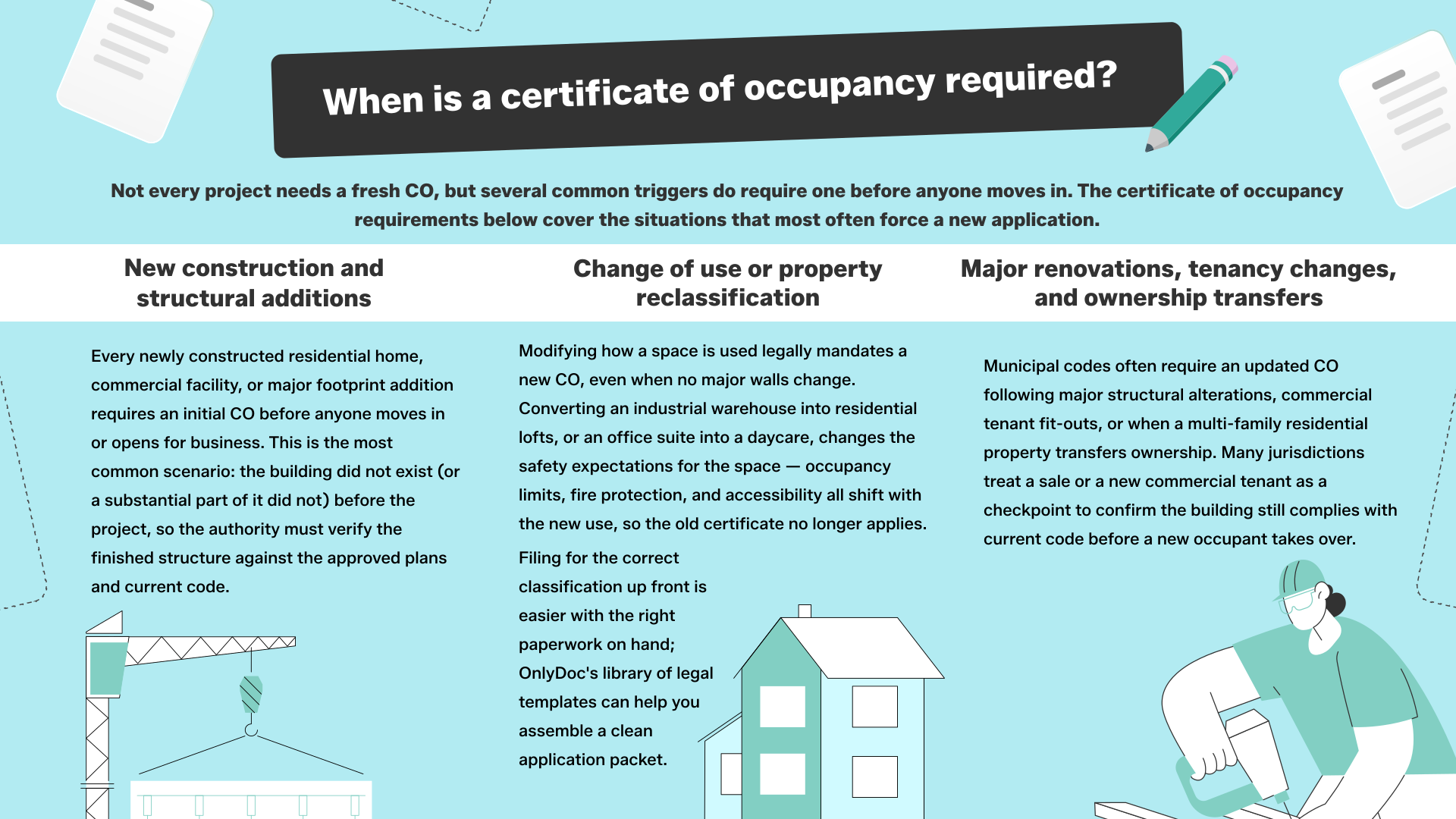
Not every project needs a fresh CO, but several common triggers do require one before anyone moves in. The certificate of occupancy requirements below cover the situations that most often force a new application.
New construction and structural additions
Every newly constructed residential home, commercial facility, or major footprint addition requires an initial CO before anyone moves in or opens for business. This is the most common scenario: the building did not exist (or a substantial part of it did not) before the project, so the authority must verify the finished structure against the approved plans and current code.
Change of use or property reclassification
Modifying how a space is used legally mandates a new CO, even when no major walls change. Converting an industrial warehouse into residential lofts, or an office suite into a daycare, changes the safety expectations for the space — occupancy limits, fire protection, and accessibility all shift with the new use, so the old certificate no longer applies. Filing for the correct classification up front is easier with the right paperwork on hand; OnlyDoc's library of legal templates can help you assemble a clean application packet.
Major renovations, tenancy changes, and ownership transfers
Municipal codes often require an updated CO following major structural alterations, commercial tenant fit-outs, or when a multi-family residential property transfers ownership. Many jurisdictions treat a sale or a new commercial tenant as a checkpoint to confirm the building still complies with current code before a new occupant takes over.