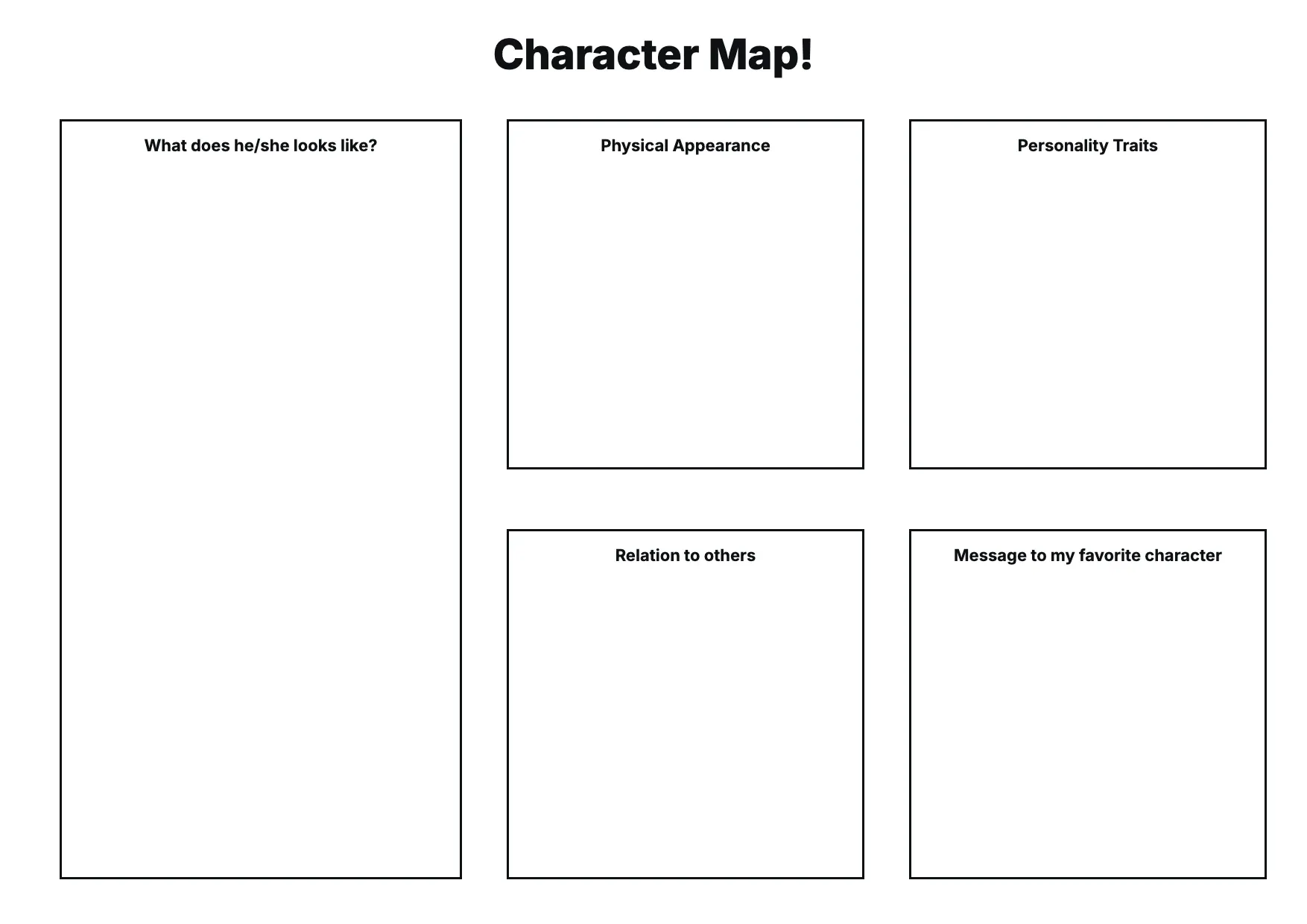
 Character Templates Character Map Template Use template
 Character Templates
Character Templates Character Map Template Use template 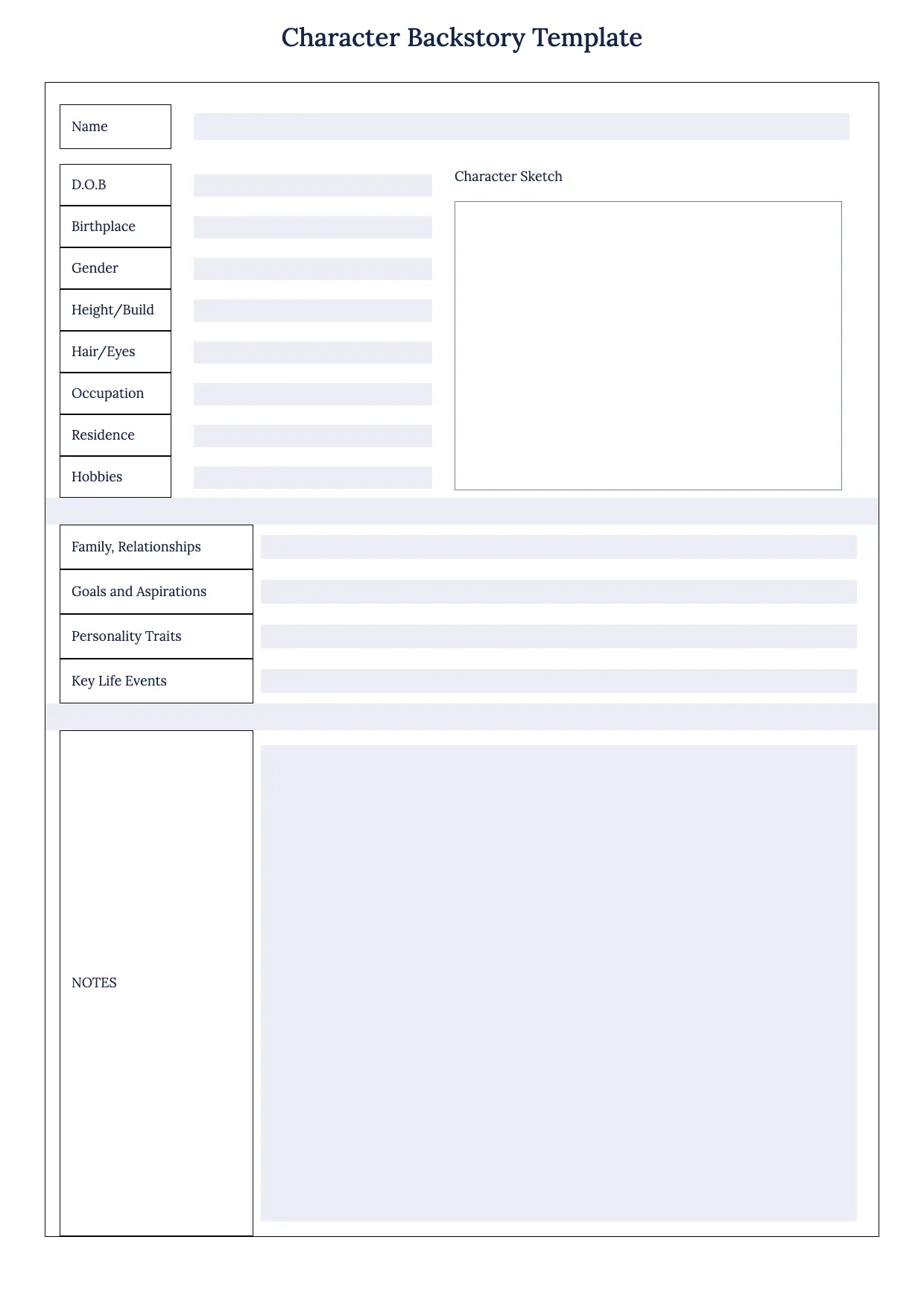 Character Templates Character Backstory Template Use template
 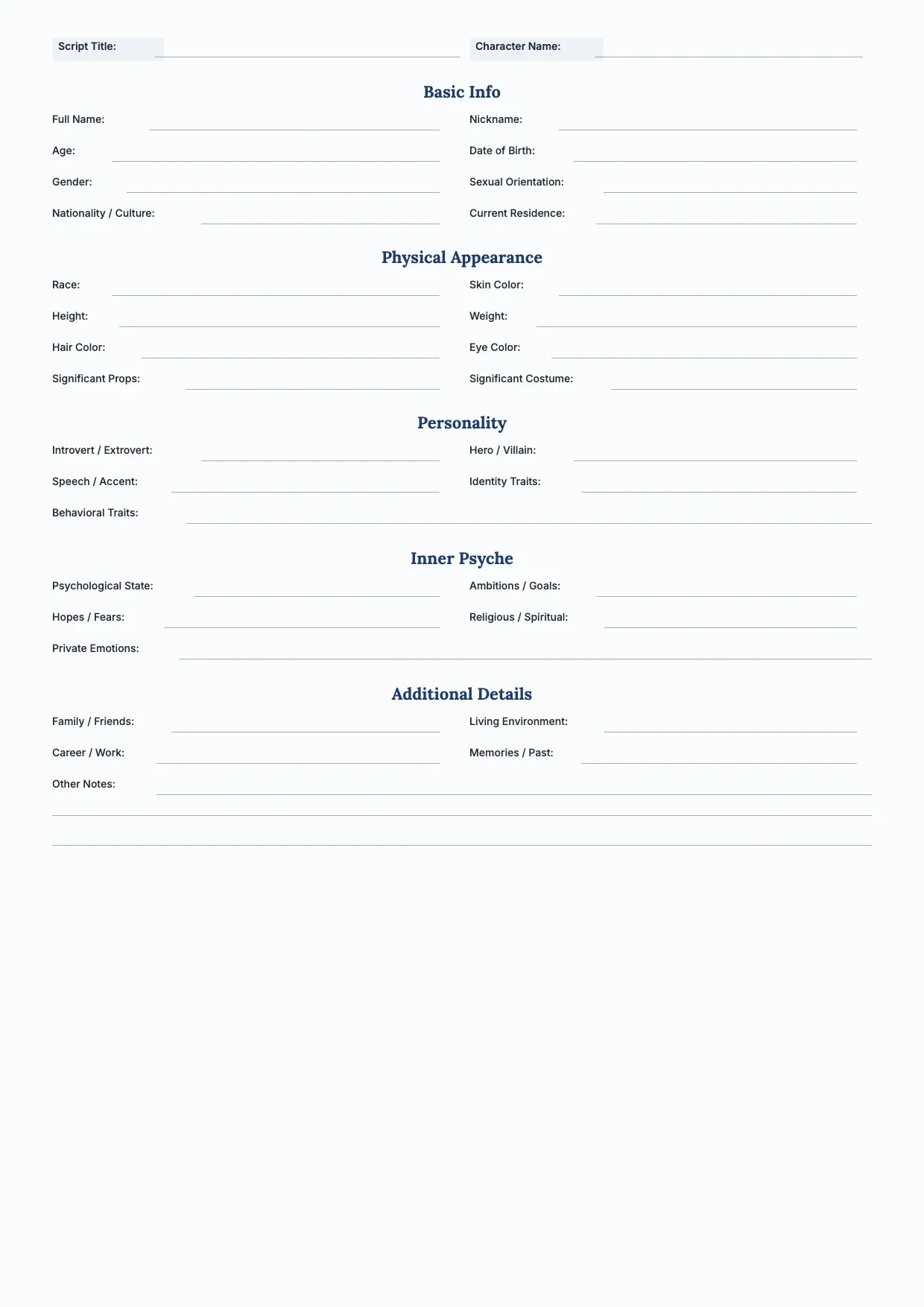 Character Templates Character Profile Template Use template
  Character Templates Character Sheet Template Use template
 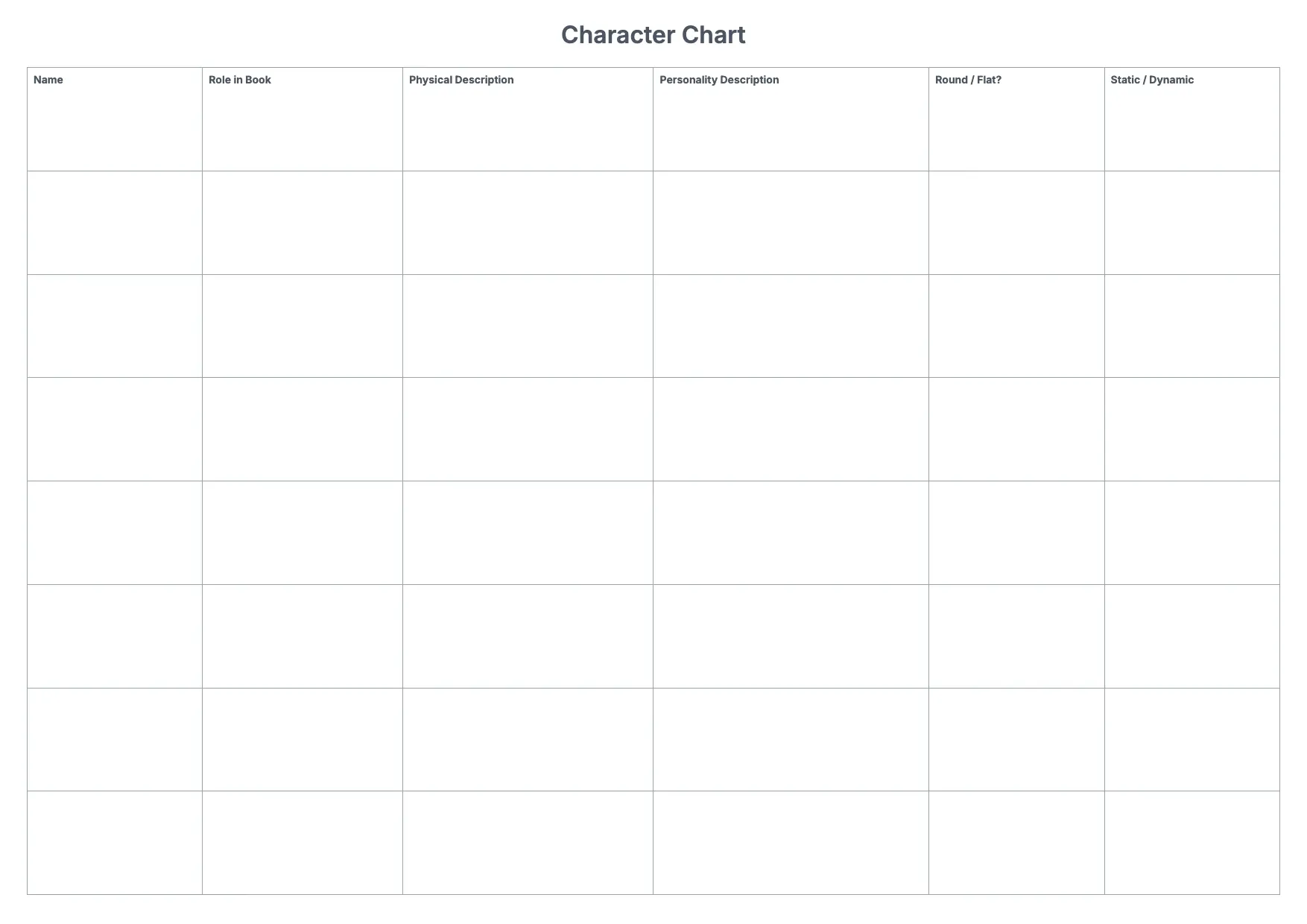 Character Templates Character Chart Template Use template
 About Character Templates
Our character templates give writers a structured way to develop the people in their stories, mapping personality, backstory, motivation, fears, and relationships in one organized sheet. Starting from a character profile template keeps your cast consistent across chapters, so traits and history stay believable as the plot grows.
Use a detailed character template for major roles or a lighter sheet for a supporting cast. Hobby writers can try our character profile template free of charge, and our free character templates let you add or remove traits, arcs, quirks, and notes to fit any genre, from a novel to a screenplay.
When a profile is ready, export a tidy PDF to keep beside your manuscript and update it as the character develops. Prompts for motivation, flaws, and conflict help you build memorable, three-dimensional characters and spot gaps before they reach the page.
Frequently asked questions
What is a character profile and why do writers use it?
A character profile is an organized record of a character's traits, history, goals, and relationships. Writers use it to keep details consistent across a long project and to understand what drives each person in the story. A character profile template gathers these elements in one place, so you can plan arcs before and during drafting.
What kinds of details are typically included in a character profile?
A profile usually covers a name, age, appearance, personality, backstory, motivation, fears, and relationships, plus habits or quirks that make the character memorable. Some writers add voice notes or arc goals. Our character templates group these fields logically, so you can capture both surface traits and the deeper psychology behind them.
What aspects of a character's life can be explored in a character profile template?
You can explore upbringing, family, education, career, friendships, and the formative events that shaped a character's worldview. You can also map desires, conflicts, and how the character changes over time. A character profile template free of cost gives you room to develop both the visible life and the hidden motivations driving each decision.
How can using a character template improve the overall story?
When characters are well defined, their choices feel consistent and their growth feels earned, which strengthens the whole plot. A character template helps you spot gaps, avoid contradictions, and give each person clear goals. That clarity makes dialogue sharper and conflicts more meaningful, so readers stay invested from the first chapter to the last.
How do I use a character profile template?
Open the sheet and fill in each field as you get to know your character, from physical appearance and personality type to backstory and goals. You can treat it like a character questionnaire, answering prompts that guide character development. Keep the profile beside your draft and update it as the character grows through the story.
What information should be included in a character profile?
A useful profile captures a character's traits, strengths, and a defining flaw or weakness, along with occupation, quirks, motivations, fears, and key relationships. Adding an archetype or central conflict helps shape the character's arc. These details keep complex characters consistent and memorable from the first chapter to the last.
When should I create a character profile?
Many writers build a profile before drafting, so motivations and conflicts are clear from the start, but profiles are just as useful mid-project to keep a growing cast consistent. Whether you are planning a novel or developing a main character partway through, the template helps you keep track of every important detail.